The following reviews are from some of your neighbors in South Orange and Maplewood who have completed these home energy improvements.
Electric Vehicles
1. Peter and Lauren Sklaver, South Orange “single-family home” owners
For years I was curious about electric vehicles, but I kept finding reasons to wait. Concerns about range, charging infrastructure, and whether an EV could realistically fit into my family’s busy schedule made me hesitant to make the switch. After doing more research and seeing how much the technology had improved, we finally decided the time was right. We chose the Kia EV6 because it offered the perfect combination of range, performance, technology, and value. The fast charging capability gave me confidence for longer trips, and the sleek design and spacious interior made it feel like a true upgrade from my previous vehicle. Looking back, my biggest surprise is how easy the transition has been. The convenience of charging at home, the lower operating costs, and the smooth, quiet driving experience have made me wonder why I didn’t make the switch sooner.
2. Ritu Pancholy Bachhawat & Darshan Bachhawat, South Orange “single-family home” owners
We are the proud owners of two EVs. We bought a Tesla awhile ago and more recently a Kia EV suv. We are in love with our Kia and the technology has improved recently. We frequently take long road trips to Vermont and have found it is easy to charge the Kia on the Tesla super chargers along the way and never fear for not finding a charger. Our kids enjoy the 15-minute break to pick up snacks while we supercharge the car. We have a charger at home via the juice box charger and received a PSEG subsidy or refund for installation costs. We have seen no measurable or significant increase in our electricity costs despite having two EVs. We charge each car about 1x a week in the summer because we don’t commute for work and 2x a week in the winter months. If you take a long trip, you plug it in when you return home overnight. It’s been amazing to not rely on increasing gas prices and have to fill up regularly. Plus there are no service appointments for oil changes. Our Tesla has needed no work in over 5 years.
I can’t think of a more maintenance-free lifestyle for busy people.
3. Erika Malinoski & Family, South Orange multi-generational home owners
We hesitated to get a fully electric vehicle due to concerns about the range and charging time, but when we moved to New Jersey we were weirded out by the prohibition on pumping your own gas and took the plunge. We love it! My husband and I have a 2018 Tesla Model X. During normal use, we only need to charge it about once a week, plus whenever we do weekend trips. For a long time, we charged it by plugging it into a normal outlet, which is super convenient and worked fine except when we took a long trip on Saturday followed by another long trip on Sunday. We did eventually put in a 240V line to the garage to do faster home charging for those instances (and to run my dad’s table saw) rather than going to a charger.
We regularly drive to Michigan to visit family. For an older car like ours, there are about four 30-40 minute charging stops (newer models charge faster). This hasn’t really been a problem, though, because the kids need to get out and wiggle and eat anyway, and they’re generally the limiting factor on getting back on the road. Cold weather does have a noticeable impact, we have to add an extra charging stop, but it still works out fine.
My dad has an IONIQ 5. He likes it a lot and uses it for road trips as well. At the big commercial chargers, his charging stops are about 20 minutes every 200 miles or so. I personally prefer the user interface on the Tesla, but that’s a matter of preference.
Rooftop Solar Panels
1. Erika Malinoski & Family, South Orange multi-generational home owners
We used Tristate Solar to install our panels back in 2022. The solar panels work great, but we were frustrated with their handling of the permitting process. The company transitioned to new ownership while we were in the process, and paperwork that was supposed to be filed with PSE&G wasn’t, which delayed turning on the panels for some time. However, we don’t know what the experience of someone using them now would be. We have a large roof and produced all the electricity we consumed for a couple years before we installed heat pumps, water heaters, and an induction stove.
Community Solar
1. Julianna Garreffa & Mottaqui Karim, South Orange condo owners
Since wwe live in a condo, I can’t install solar panels on our roof. We still wanted to support the buildout of renewable energy, so we looked into community solar.
We found Hartz Solar in early 2025 through NJ’s official state database of certified community solar providers. It took us half an hour to sign up and review the contract they sent over. No fees, no penalty for cancelation anytime, and no separate bill. They connected us to a project and the credits started showing up on our bill within 3 months. It’s been about a year, and we’ve saved over $200 on our electric bills so far!
Heat Pump HVAC Systems
1. Eric Stein, South Orange “single-family home” owner
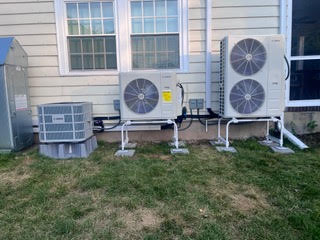
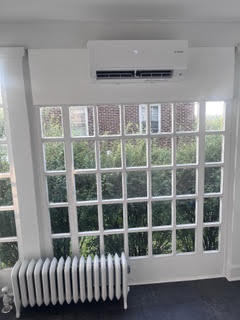
We recently worked with Ciel Power to install a new HVAC system in our home. They applied rebates from NJ programs which made this project affordable. The PSE&G repayment plan is extremely helpful as well. We had oil heat. As part of the project, the oil furnace will be removed. There is a rebate for this. The home had no A/C and no ductwork. In turn, the upstairs where the bedrooms are, now rely on a Bosch ductless heat pump (the handler was placed in the attic). There is a thermostat for this floor.
Every room on the main floor (including the “Maplewood Room”), the basement, and the useable room in the attic, had a mini split installed. A total of 8 mini splits was installed with 2 outdoor Bosch Heat Pumps put in to run the system. All the wiring went through the house which was a major part of the project. The Heat Pumps upstairs and downstairs now provide our air and heat going forward. They are all linked together through a wifi thermostat.
Both systems are extremely quiet. They each have been set around 75 degrees and the house is very comfortable. This home has been extremely uncomfortable since we moved in a year ago. It feels like an entirely new home now.
2. Patrick and Jennie Aylward, South Orange “single-family home” owners
Reiner Group installed our Mitsubishi Electric mini split heat pump system in 2019. The system circulates refrigerant to transfer heat between an outdoor compressor/condenser unit and individual indoor heating and cooling units in three different rooms. The heat pump system supplements our gas-powered forced-air system, which doesn’t get sufficient heating and cooling to every room.
This heat pump system does come with the aesthetic tradeoffs of units protruding from the interior walls, and extra gutters outside covering the copper pipe that connects the compressor and the wall units. But overall, we are happy that this solution didn’t require tearing up any walls for additional ducts, and we really love the efficiency of being able to heat/cool rooms individually as needed.
3. Erika Malinoski & Family, South Orange multi-generational home owners
We live in a gigantic old house with thirteen rooms that was an absolute HVAC nightmare. Our ducted gas/AC system could not evenly heat/cool rooms, and we have two third story rooms that are under the roof and very difficult to work with. We looked at getting heat pump mini-splits professionally installed, but the quote from Speer Air was very expensive (though not unreasonably so given the complexity of the project), and we weren’t sure it would end up being what we wanted. Since Dad and I enjoy DIY projects, we played around with a few other options instead that could be experimented with for less cost.
For areas that have at least a 26” wide sash window with enough below-sill clearance, we installed several window Gradient units. These are easy to install, you just need two people to carry them up any stairs and stick them out the window. They are also non-destructive and easy to remove. I really like these for common spaces. Putting one up in the hallway on the third floor took care of most of our heating and cooling needs up there and let us adjust the temperature on the third and second floors separately. We also tried them in the bedrooms, and the heating and cooling ability was great, but we ran into a snag. The units themselves are extremely quiet, but the compressor varies in speed. During parts of its cycle, it would go through the exact resonating frequency of the window frame at four in the morning, and it would rattle and wake me up. This may not be a problem in all houses, but it was in ours.
We also tried the DIY Mr. Cool wall cassette units. They were much cheaper to install than getting it professionally done, and we could do them in chunks and test out if we liked them. Only attempt these if you are comfortable doing home construction projects, though. These have been working great for the downstairs kitchen and living room for cooling and for much of our heating, although they tend to not do a great job of determining when they’ve reached the correct temperature. We tend to need to manually turn them on and off. We also did run into noise issues in the bedroom again, a faint ticking sound from thermal expansion and contraction (I don’t know if the higher end models used by professional installers have the same problem). It’s not a problem during the day or when cooling, but it wakes me up at night when heating. During the cold portions of the last winter at night, we did switch the gas back on, but we were able to use substantially less of it. Even without the ticking noise, the downstairs units weren’t quite able to keep up with the very coldest weather. The Gradient units did better, but were smaller.
For my eldest’s bedroom, which does not have a suitable window for a Gradient unit or a wall space for a cassette, I got a Midea Duo stand alone heat pump. Technically, it only works for heating if the intake air temperature is above 40°F, but I jury rigged it to draw from the indoor air, so it works at any temperature now (as long as there is heating being done in the rest of the house that it draws air from. This is a fix for a difficult room, not perpetual motion). However, that made it pretty loud until I rigged up a sound proofing system for its alcove. That worked great, and it’s now whisper quiet. It works MUCH better than the HVAC system could ever do for that room.
What made the biggest difference for us has been being able to set different temperatures in different parts of the house and not heat or cool rooms we’re not using. That has dramatically reduced our overall energy usage. Before, we were wasting a lot of energy making the third floor too hot in the winter because we were trying to get heat to the second floor, and our only option with gas was to heat/cool everything. Also, it has made me rethink how much we really need the rooms conditioned. Cooling the air a little bit and then turning on the ceiling fan actually works great in many rooms. My eldest actually almost never turns on his room’s heat in the winter because he likes his room cooler and then cuddles up with his electric blanket (electrical resistance heating is horribly inefficient in general, but if it means only heating a tiny area instead of a large one, it can balance out). We still don’t have a great solution for our bedroom, so we end up warming it up quite a bit before bedtime, turning everything off for the night, and then patching in with gas, an electric blanket, or a short stint of electrical resistance heater if someone’s up in the middle of the night. We’re still working on optimizing that.
Weatherization
1. We interviewed a local senior citizen who participated in PSE&G’s weatherization program for low and moderate income households. Although he wishes to remain anonymous, he gave us permission to share the below details of his experience:
“He received the following, all FREE:
- A new refrigerator to replace an older less-efficient model, fully installed
- Spray-foam insulation for his attic and walls!
- Weather stripping of his doors, installed
- Low-flow shower heads, installed
- Other products, as we already know PSE&G gives out during their assessments (LED light bulbs, power strips, etc.)
The insulation piece was especially surprising. It is likely that job alone is worth $10-$15K. The resident reported a major improvement in comfort and energy efficiency.
They took a little longer than he would have liked, but not a big annoyance. He had his initial assessment in the fall, but they didn’t get out to do the insulation and weather stripping until Feb/Mar. He would have liked it done before the winter.
The resident reported that all he needed to show was his Social Security statement to prove income eligibility. He added that verification was a simple process.”
2. Eric Stein, South Orange single-family home" owner
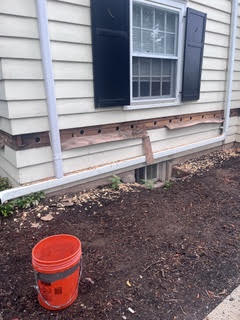
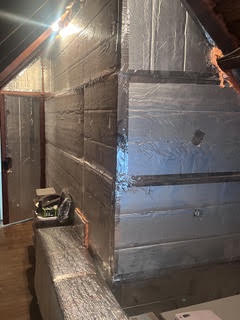
We recently had our 100 year old home in South Orange weatherized. A new HVAC system was also being installed as part of the project. Exterior walls were filled with dense packed cellulose. Loose filled cellulose was placed in the attic flat. The crawlspace, knee walls, rim joists, and attic door were taken care of as well. High density spray foam and 2 inch foam boards were used in these areas. Rebates for this project are through the NJ Whole Homes and the NJ BD Programs. The home has been extremely comfortable in the short time since the project was completed. There have been several days over 90 degrees while the thermostat stays close to 75. This project was managed by Ciel Power.
Heat Pump Water Heaters
1. Erika Malinoski & Family, South Orange multi-generational home owners
We have Proterra heat pump water heaters. They work great, and we haven’t had any problems running out of hot water. They do draw heat from the surrounding air, though, so we needed to make sure there was proper air circulation and that we didn’t mind the area around it getting noticeably colder. During the summer, it keeps our lower floor play area nicely cold without additional air conditioning. During the winter, that area gets a bit cold.
Induction Stoves
1. Mottaqui Karim & Julianna Garreffa, South Orange condo owners
We’re huge foodies, so we splurged on a GE Profile Smart Convection Oven with 5 Induction Burners. We will never go back to gas! It’s faster, safer, and offers better temperature control. Plus, our home’s air quality is better now that there are no gas flames in our kitchen.
To prep for it, an electrician from Toth Electric installed a new electrical line to our stove and capped the gas line. The $250 PSE&G rebate helped pay for that.
2. Erika Malinoski & Family, South Orange multi-generational home owners
We purchased a five burner Fischer and Paykel induction stove to replace our six burner gas stove. It works great for cooking, and the clean up is so incredibly much easier. We did need to make sure we had pans that magnets would stick to that would work with it, but several of our old ones fit the bill. Occasionally there’s a slight buzz, but it’s not a problem at all.
Heat Pump Clothes Dryers
1. Mottaqui Karim & Julianna Garreffa, South Orange condo owners
We purchased a Bosch 800 Series ventless heat pump dryer in 2025 and took advantage of the $250 rebate from PSE&G. Although it says “compact”, it fits our king-sized comforter easily! This dryer does take longer to run a cycle, but the energy efficiency savings make it well worth it. Moreover, we no longer have to clean our dryer vent regularly to prevent fire risk, which means we’ll recoup the up-front cost of the dryer within only three years.
2. Erika Malinoski & Family, South Orange multi-generational home owners
We got an LG all-in-one heat pump washer/dryer. It does a very good job washing and drying. The combined cycle does technically take longer, but not needing to go down and switch it is a big time saver. We left our old dryer in place when we installed it (it’s bigger than the old washer, but not hugely so), so we do have that for back up if something needs to get dried faster. There is a small bit of water leakage when doing the drum clean cycle (which it warns you about), but not more than a towel absorbs.