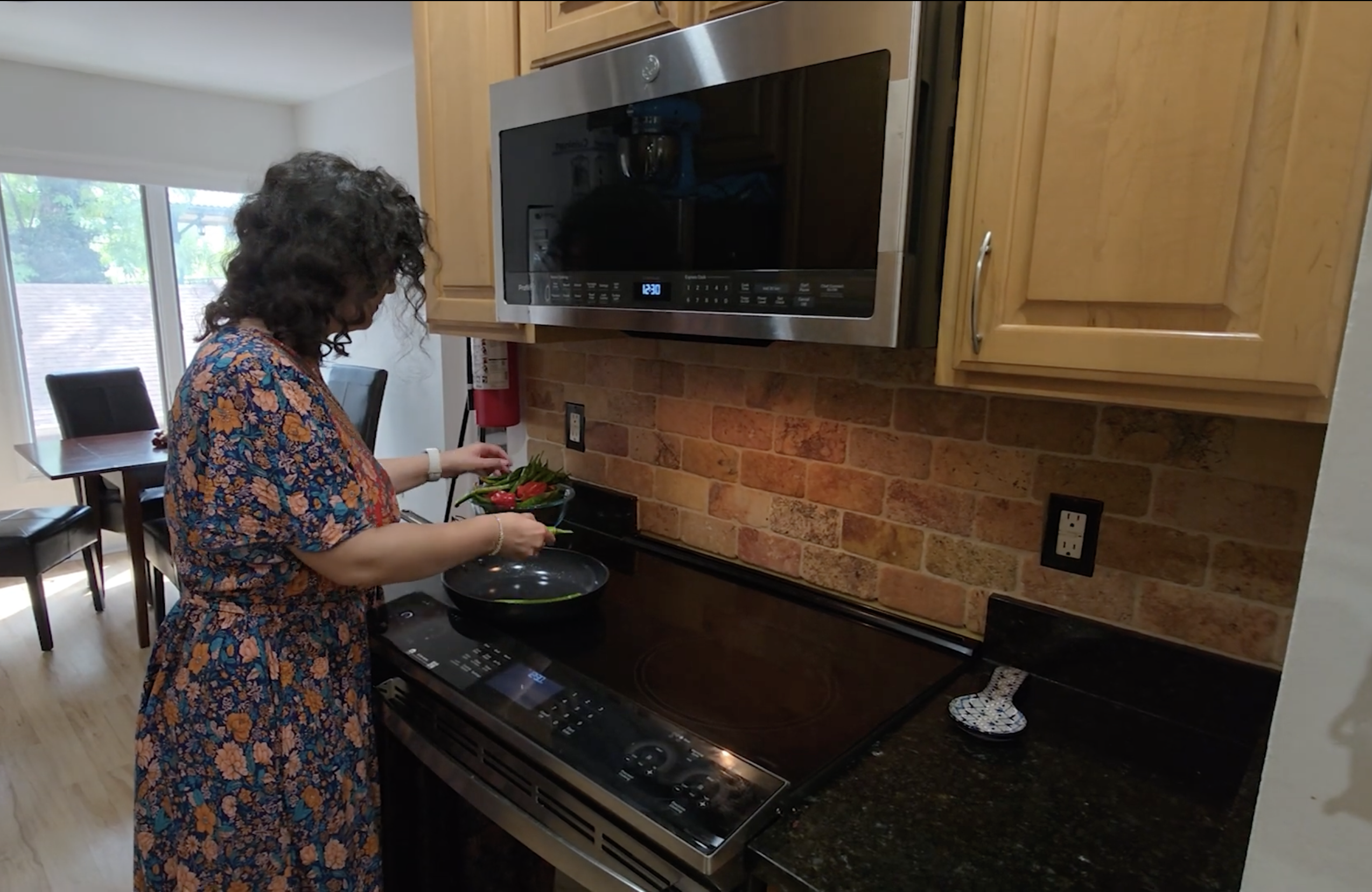
Intro to Induction Stoves
Induction Stoves are the healthiest, most efficient, and most environmentally friendly way to cook meals. They cook faster, release no pollutants or direct emissions, are easier to clean and waste less heat when compared to gas stoves.
Actions you can take right now:
-
Confirm you have electrical capacity for an induction stove. If you already have an electric stove, you’re good to go. If you’re switching off gas, get some quotes from a licensed electrician on the cost to run a new electrical line from your panel to your stove and to install a 240V outlet.
-
Confirm that all your current cookware has magnetic bottoms. Because induction stoves use magnets to heat cookware, you’ll need to make sure your existing pots and pans are compatible. Simply test this by seeing whether a magnet sticks to the bottom of your cookware.
-
Research ENERGY STAR models. Search here for ENERGY STAR certified models, which is an eligibility requirement for rebates.
How do induction stoves work?
Induction stoves do run on electricity, but they are far more advanced than the “glowing red” electric models of old. Those electric stoves heat up a coil, which radiates heat up to the glass and then indirectly to the pots and pans. By comparison, induction stoves use a magnetic field to induce a current in the pan itself. This current encounters resistance in the pan, which generates the heat used to cook your food.
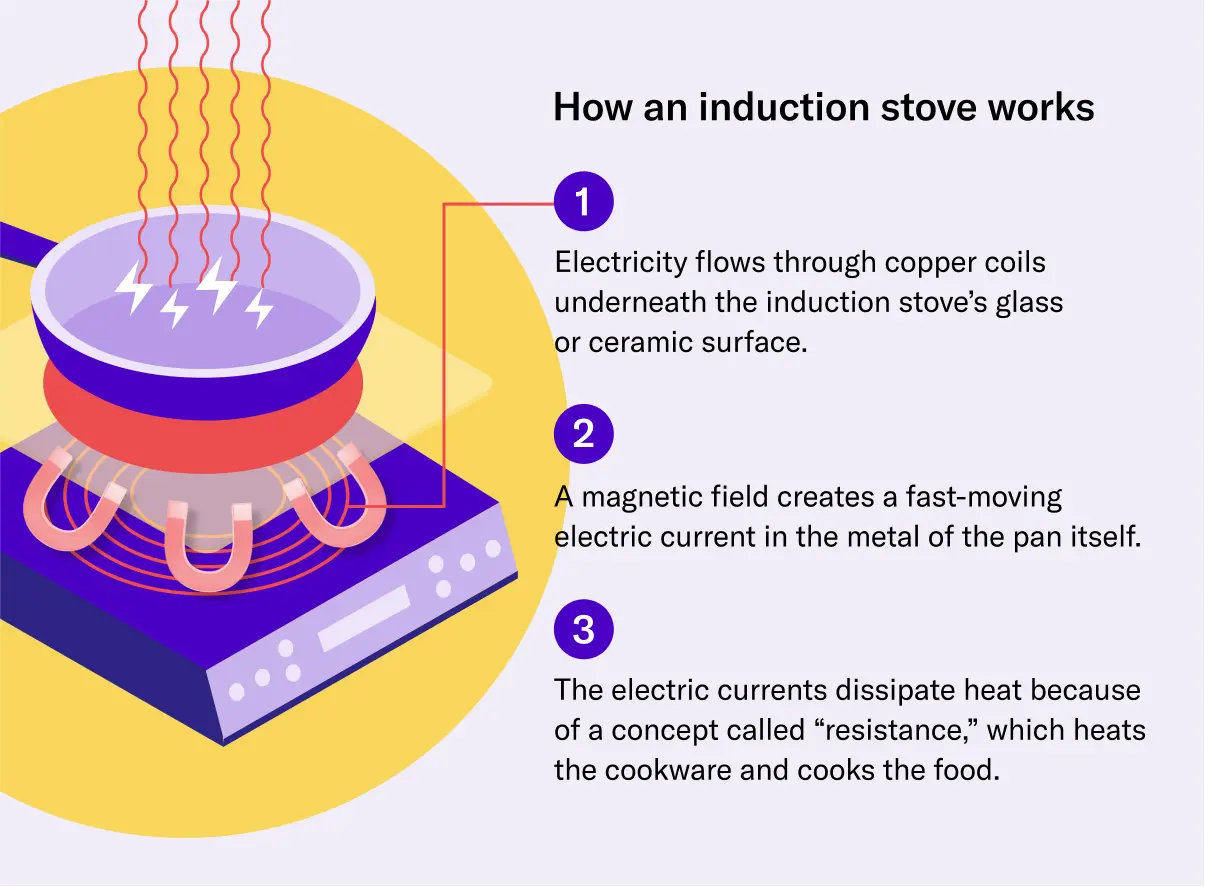
Image source: Rewiring America
The result is a less wasted heat and energy, and a far safer and more comfortable cooking experience.
What makes induction stoves more efficient?
Since induction stoves create and transfer heat directly to where it is needed, less energy is required as an input. You can feel the difference while cooking. Gas stoves can increase ambient kitchen temperature by 6°F, compared with 1°F for induction stoves.
More importantly, induction cooktops transfer heat with up to 90% efficiency, which is more than twice the efficiency of gas ranges.

Image source: Rewiring America
What are the health benefits of switching to induction stoves?
As with all gas-fueled appliances, burning gas releases carbon dioxide (CO2), a heat-trapping greenhouse gas that contributes to global warming and climate change. However unlike other gas appliances that are tucked away in basements, our families are directly exposed to several pollutants while cooking.
Gas stoves have been found to carry significant health impacts, including:
- High indoor benzene concentrations above the level of second-hand smoke.High benzene exposure poses serious health risks, including blood disorders and cancer.
- Release of respiratory irritants, including nitrogen dioxide, formaldehyde, and carbon monoxide.
- Increased risk of childhood asthma, and increased indoor air pollutant risk to children’s brain, respiratory and organ development.
While some of these risks can be mitigated through the use of a properly vented range hood while cooking, studies have also found that gas stoves leak methane even when they are not in use.
Direct-to-pan heating and lack of an open flame also reduce the risk of burns, making induction stoves safer, especially for homes with kids and pets.
It’s a myth that gas stoves provide a better cooking experience
Gas companies have marketed the famous phrase “Now we’re cooking with gas” since the 1940s, when moving to gas cooking was an improvement over the use of wood burners. This phrase has worked well for the gas industry, perpetuating the myth that chefs prefer gas over electric.
Many individuals find an intuitive advantage in being able to “see” flame levels on gas stoves, but the learning curve for moving to flameless models is minor.
In fact, cooking with electric stoves provides better heat distribution compared to using an open flame. Gas stoves did hold an advantage in their ability to quickly reach high temperatures compared with coil-based electric stoves, but that has been erased by the development of induction cooktops. Induction cooktops are capable of boiling water 4 times faster than gas.

Image source: EnergySage
How much do these stoves cost? What do I need to know to make the switch?
There are 3 factors to consider when making the switch to induction stoves–equipment cost, electric requirements and cookware compatibility.
1) Upfront Cost
On average, induction stoves can cost more than comparable gas models. For budget-friendly options, lower-end gas stoves start around $400, while induction models start at $800.
Fortunately, our local utility PSE&G offers a $250 post-purchase rebate on eligible models to offset that cost premium.

Image source: PSE&G
Once your stove has been installed, you simply fill out this form within 120 days of your purchase. You’ll need your PSE&G account info, the stove model, and proof of purchase (a receipt will do). Then, a check should come to you in the mail within a few weeks.
2) Electric Requirements
While all stoves require an electric connection, traditional electric and induction stoves utilize a 240-volt outlet with a 40-50 amp circuit compared with the standard 120-volt outlet used in gas models. Upgrading to an appropriate electrical connection will require a licensed electrician for most homeowners, with an additional cost of ~$300-$600, plus additional costs to cut and cap the existing gas line. Recently, several companies have announced new induction stoves that contain a small, built-in battery that would allow a connection to a standard 120-volt outlet.
3) Cookware
Since induction stoves rely on a magnetic field to generate heat. While most modern cookware is ferromagnetic, some materials will not work with induction stoves. Simply test whether a magnet sticks to the bottom of each of your pots and pans to confirm whether it works with an induction cooktop. Most cookware will also display a symbol on the bottom indicating compatibility.
Make a plan
Whether you are looking to swap out your gas stove immediately, be prepared for your existing stove’s end of life, or want to plan ahead for your next kitchen renovation, a good plan will make the process easier.
As with all electrification projects, the first place to start is at your electric panel. If you have ‘open’ spaces on your circuit breaker, you will likely be able to add the additional circuit required for an induction stove. Chat with an electrician on what it would cost to add the appropriate wiring, even if you’re not ready to make the switch just yet.
Next, check to make sure your existing cookware is compatible with an induction stove. You can look for a ‘looping wire’ symbol on the bottom of your existing cookware or simply see if a magnet sticks to the bottom of each pot and pan.
Finally, compare existing induction stove models, or reach out to Electrify SOMA to ask questions or visit one in action.